


Vision
MOMENTUM BUGA Dresden 2033.
We’re planting the future.
The 2033 Federal Horticultural Show is a key project for Dresden’s future. Two green lifelines run through the city, giving it new momentum.
New green spaces and public open spaces are being created in several key areas. Urban spaces that were previously separate are being connected and reintegrated as a shared living environment. Existing landscape features are being carefully developed and their quality sustainably enhanced—with clear added value for the region.
Momentum: BUGA Dresden 2033 Plans of the Core Areas
Lifeline 1
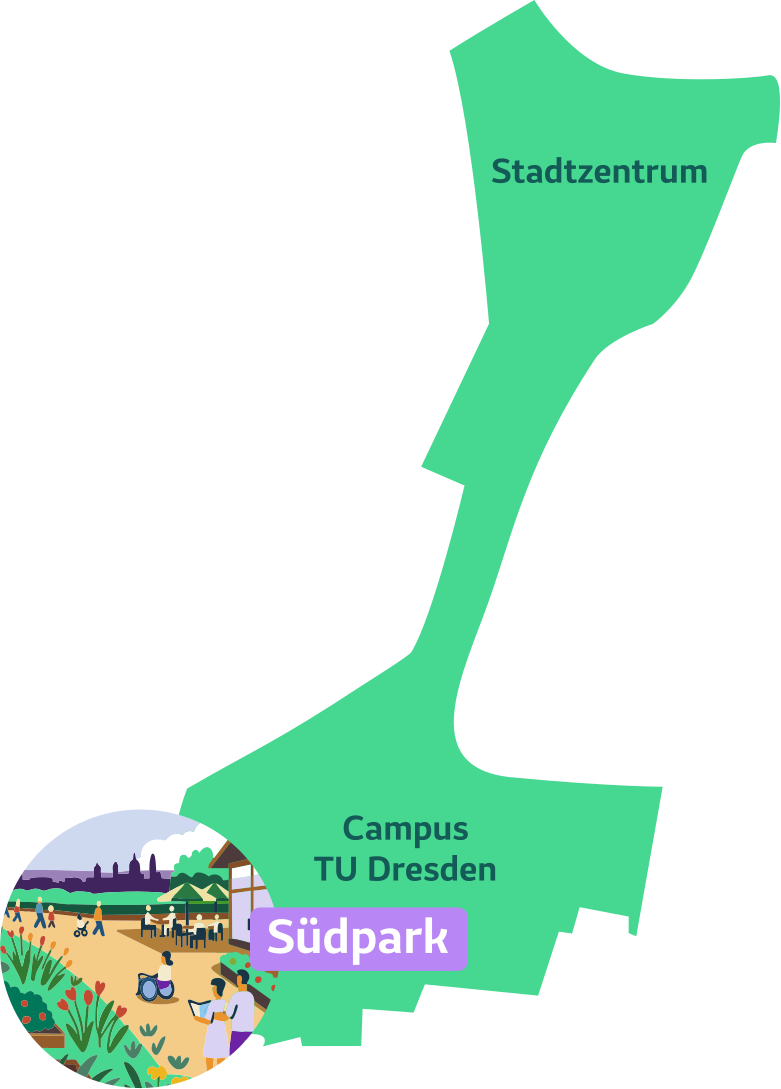
From Südpark through the TU Dresden campus to the city center
With BUGA 2033, “Dresden’s New Vision” will take shape in Südpark. This green corridor 1 stretches across the campus of TU Dresden all the way to the city center. The neighborhoods of Altstadt, Plauen, and Zschertnitz—which have previously been separated by traffic corridors—are growing together. New green spaces, inviting gathering places, and a dense network of bike and walking paths will shorten travel distances and promote climate-friendly mobility. The result will be a cohesive space for recreation, education, and physical activity—a place where nature, science, and urban life intertwine. Via the new pedestrian and bike bridge spanning Bergstraße, Südpark will serve as a link between Fichtepark, the Bismarck Column, and Volkspark Räcknitz.
The TU Dresden campus will be connected to Südpark via new planned streets and enhanced through green stepping stones and the restoration of historic garden gems, such as the sunken garden at the Barkhausen Building. At the same time, mobility is being reimagined. New thoroughfares will strengthen the sustainable connection to Südhöhe, while traffic will be calmed on Mommsenstraße and Mommsenplatz. Along the “Academic Mile,” science pavilions, learning islands, and citizen science gardens will bring science into the public space.
The city center is the heart of Dresden. For BUGA 2033, it will become the event’s green heart. Here, history and the present converge, creating an urban space that inspires and connects. Around Prager Straße, unpaved areas and new trees will create cooling oases. The historic Touristengarten, located between Prager Straße and Reitbahnstraße, will become a green retreat, and the area around the Kristallpalast will be given a new look. The Promenadenring will form a vibrant ribbon encircling the Old Town: from the town hall forecourt, along the pathways on Seestraße, all the way to the redesigned Kreuzstraße. The train station area and Wiener Platz are also being transformed into inviting places to linger. But the city center is not only becoming greener—it’s also becoming more diverse. Temporary stages and installations for BUGA 2033 are transforming squares into “cultural gardens” that invite people to linger and participate. Educational programs for children, families, and tourists, along with the integration of perspectives from migrant and subcultural communities, are turning the city center into an open forum for everyone.
Lifeline 2
From Prohlis, past the horse racing track, to the Leuben gravel lakes
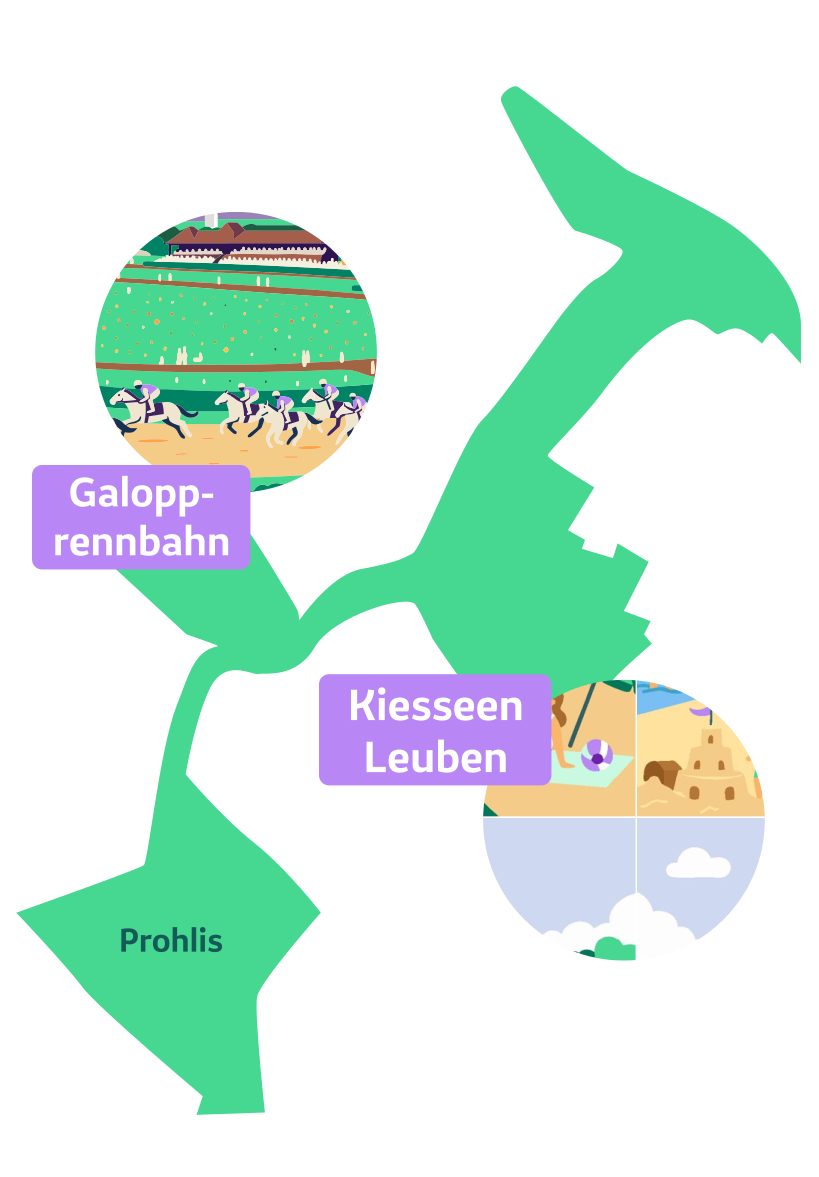
Prohlis is becoming a vibrant, sustainable, and climate-resilient district where nature, community, and culture—as well as residents and visitors—come together in harmony. At the heart of this transformation is ecological revitalization. To improve the urban climate and create habitats for plants and animals, a section of the Geberbach stream will be enhanced. Residential courtyards will be transformed into cooling oases and gathering places for residents through greening and rainwater harvesting. Play areas and open spaces, such as the playground on Gamigstraße, are being redesigned with resident input to become safe, attractive places for children and families. Educational gardens and learning spaces in public green areas bring knowledge to life. Through virtual tours, the historic circular ditches bring the region’s settlement history to life.
BUGA 2033 marks the beginning of a new chapter: The racetrack will transform from a historic sports venue into a green space for sports, culture, and community—an active space that connects Dresden’s heritage with a sustainable future. The transformation is evident the moment you step inside. Open paths, children at play, athletic activities, and shared experiences define the scene. At the same time, tranquil retreats are emerging, featuring meadows, planted areas, and open woodlands. The “Climate Ring” encircles the site, providing cooling, storing water, and strengthening the city’s resilience to climate change. In the evening, the cultural side comes to life: concerts, exhibitions, and art transform the racetrack into a place where the past and present converge. Historic buildings are preserved and become part of the new whole. In this way, the racetrack becomes a place for everyone—for sports, nature, culture, and social interaction.
With BUGA 2033, the site is coming back to life. The shores are being transformed into vibrant recreational spaces featuring a natural beach, meadows, and a nature trail that brings the local flora and fauna to life. The swimming area demonstrates how nature and the city can be brought together. The Trümmerberg will become a lookout point and a place of remembrance, offering sweeping views over Dresden. At the Südsee, activity and relaxation come together—from water sports to peaceful downtime, always in harmony with nature. In the evening, a special atmosphere emerges: light, music, and small-scale cultural events turn the area into a gathering place for socializing and shared experiences.
Stay informed about the green future of Dresden
Get the latest info about BUGA 2033 delivered straight to your inbox